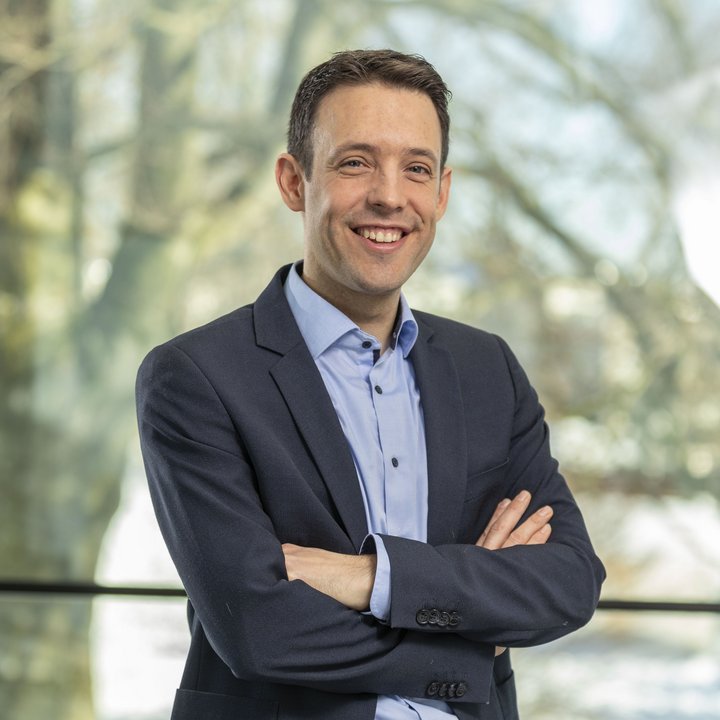
Head of KMU-HSG Transfer, Member of the extended board KMU-HSG, Co-Director association «KMU-HSG Connect», Senior Lecturer University of St.Gallen
Project manager, research associate
Research associate
Project manager, research associate
External researchers: Prof. Dr. Tobias Jenert Universität Paderborn, Prof. Dr. Christoph Winkler IONA College NY
The business environment is increasingly dynamic and uncertain: post-COVID effects, geopolitical tensions, artificial intelligence (AI), shifting customer needs, and changing market conditions. In such a context, entrepreneurs must be able to obtain relevant new information and evaluate it efficiently as a basis for decision-making.
Our research focuses on Self-Regulated Entrepreneurial Learning (SREL). The SREL approach enables entrepreneurs to learn efficiently and effectively. This is a critical capability for entrepreneurs, especially in uncertain or unfamiliar situations. We examine, for example, the learning strategies entrepreneurs use, their learning activities, and how they regulate their motivation in order to remain productive. The method can be applied to a wide range of entrepreneurial challenges.
Developments related to digitalization and artificial intelligence are particularly fast-moving. Entrepreneurs therefore need to identify relevant developments and assess how they can be meaningfully applied within their own business context. For this reason, we also investigate how SMEs can practically leverage digitalization and AI.
For example, we developed the website www.kmumeetki.ch, which provides SMEs with an overview of how AI works, its advantages and disadvantages, and concrete use cases showing how AI can be applied in practice.
Our research deals with the following topics:
Main project 2021-2026
Our main research project is funded by the SNSF project “Self-Regulation and Dealing with Uncertainty: How to Support Entrepreneurs in Coping with Uncertain Decision-Making.” Our research activities include contributions to both fundamental and applied research.
Contributions to Fundamental Research:
We focus on two central topics in our fundamental research: 1. business idea search processes and 2. self-regulated entrepreneurial learning (SREL).
1. Business idea search processes: Our research has shown that entrepreneurs search for business ideas in different ways: passively, actively, and systematically. In doing so, we not only developed a new measurement scale but also identified the factors that foster the development of innovative business ideas.
2. Self-regulated entrepreneurial learning (SREL): SREL refers to entrepreneurs’ ability to make their own learning process more effective, efficient, and systematic through self-regulation. This strengthens their capacity to cope with uncertainty and to make more informed decisions. The process of self-regulation operates on cognitive, metacognitive, and motivational levels. As this research field is still emerging, we developed our own measurement instruments and established its initial foundations. Based on more than 400 interviews and additional quantitative studies, we have demonstrated that SREL is a key approach for navigating uncertainty and fostering innovation. We also investigate how SREL helps entrepreneurs interact with AI more effectively and efficiently.
Contributions to applied research:
We also implement the above topics in applied research by reflecting on the findings together with peer advisory groups (“Erfa groups”) and continuously refining the approach. In addition, we have integrated elements of these insights into our framework for SME leadership competencies.
Furthermore, we examine how digitalization and AI can be translated into practical and understandable terms for SMEs. Our goal is to provide concrete tools and hands-on approaches that enable SMEs to use digitalization and AI effectively. See also the website www.kmumeetki.ch
All of these topics are implemented in various forms of knowledge transfer. We deliver talks at conferences for entrepreneurs, conduct workshops with entrepreneurs, and integrate our findings into our peer advisory groups (“Erfa groups”).
Another central part of our work is the development and implementation of tailored interventions for entrepreneurs. In these workshops, participants acquire the skills and capabilities needed to operate successfully in today’s dynamic environment.